Lady Bird Chord Progression & Harmonic Analysis | Niels Dalgaard

Tadd Dameron · 1947 · C major · 16 bars

Lady Bird — Chord Progression & Harmonic Analysis

The Dameron turnaround: four major sevenths where a I-vi-ii-V should be, each root a chromatic mediant from the last. Nothing resolves the usual way and the loop still returns home.

Modal interchange Tritone substitution

Chord progression

Analyzed excerpt

Section: Turnaround · Bars 15–16 · two chords per bar

Cmaj7 | Ebmaj7 | Abmaj7 | Dbmaj7

This is a short excerpt quoted for analysis, not the full chart, and this composition is very likely still in copyright. Published versions and recordings disagree with each other about the rest of the tune, and often about these bars too.

The books behind this page

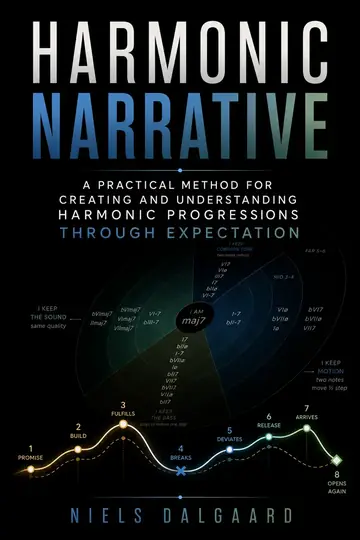
Every one of these tunes is assembled out of the same handful of harmonic resources. Jazz Harmony is those resources, explained in the order in which they build on each other.

Harmonic analysis

Key
C major
Tonal center
C
Confidence
Low
Chords analysed
4

Read in C major, the key of the tune. Taken on its own, with nothing around it, this excerpt is just as easy to hear in Db major — a few bars are often not enough to fix a tonic, and that ambiguity is a real property of the music rather than a gap in the analysis.

ChordRoman numeralFunctionWhat it is doingConfidence
Cmaj7ITonicCmaj7 is the tonic of C. It is where the progression is at rest.High
Ebmaj7bIIIModal interchangeEbmaj7 is bIII, borrowed from the parallel minor.Low
Abmaj7bVIModal interchangeAbmaj7 is bVI, borrowed from the parallel minor. It is the most common modal interchange chord in the repertoire after minor iv.Medium
Dbmaj7bIIModal interchangeDbmaj7 is bII — the Neapolitan. Borrowed harmony a semitone above the tonic, usually on its way to the dominant.Low

What the analyzer found in it

modal interchangeEbmaj7, Abmaj7, Dbmaj7

Modal interchange: Ebmaj7, Abmaj7, Dbmaj7 come from the parallel mode of C, not from the key itself.

High, medium and low next to each numeral are judgements about musical context, not probabilities. A low rating marks a bar that can honestly be read more than one way. How the ratings are decided →

Why this example matters

Numbered against C major, the excerpt is I – bIII – bVI – bII. Inside those 4 chords there is a chord borrowed from the parallel mode. There is no dominant to lean on, so the phrase is carried by whichever note refuses to settle. Sustain each chord long enough to hear which one that is before moving on. Blues for Alice, All Blues and So What use the same device, which is the argument for learning it once properly rather than three times by accident.

How the rest of Lady Bird goes

Sixteen bars, which is short, and the harmony spends most of them moving toward the tonic from unexpected directions rather than from the dominant. The ending is the reason the tune is known: instead of a normal turnaround it uses a descending sequence of major chords a minor third apart, which arrives back at the tonic without any of them functioning as a dominant. That ending was lifted wholesale by later composers and is now a stock device — one of the few cases where a specific four-bar tag became common property.

Lady Bird on record

Tadd Dameron recorded it in 1947. He is the composer of the period least known outside musicians and the one most often named by them as the bridge between bebop’s line writing and the arranged, harmonically rich music that followed. Miles Davis played it early on, and “Half Nelson” is built over these changes — putting the two side by side is the standard way of showing how a contrafact relates to its source.

Analyze this progression

Open these chords in the analyzer and change them. Move one chord, substitute a dominant, take the ii away — the reading updates and tells you what you just did.

Open in Jazz Harmony Analyzer →

Related

← All 100 standards