Eight families · 100 standards · Free
Almost every jazz standard is assembled from a small number of progressions used over and over. Here are the families, what each one does, and the tunes in the library where you can hear it — with the chords analysed.
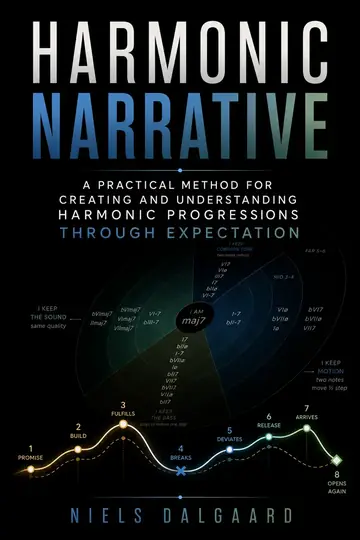
These eight families describe how progressions are put together. Harmonic Narrative is about why one of them makes a listener lean forward and another lets them settle.
A player who knows fifty tunes has fifty things memorised. A player who knows eight progressions can read the fifty-first on sight, because the fifty-first is made of the same parts in a different order. That is the whole argument for analysis, and it is why every tune in this library is opened at the point where its parts are visible.
The predominant-dominant-tonic sentence. Two chords of preparation and one of arrival, in major or in minor, and the single progression most of the repertoire is assembled from.
| Standard | Key | Analyzed excerpt | What it shows |
|---|---|---|---|
| Autumn Leaves | B♭ major / G minor | Cm7 | F7 | Bbmaj7 | Ebmaj7 | A complete ii-V-I |
| All The Things You Are | A♭ major | Fm7 | Bbm7 | Eb7 | Abmaj7 | A complete ii-V-I |
| Tune Up | D major | Em7 | A7 | Dmaj7 | Dmaj7 | A complete ii-V-I |
| Solar | C minor | Cm | Gm7 C7 | Fmaj7 | Fm7 Bb7 | Ebmaj7 | A complete ii-V-I |
| Blue Bossa | C minor | Cm7 | Cm7 | Fm7 | Fm7 | Dm7b5 | G7 | Cm7 | Cm7 | A complete ii-V-I |
| Stella by Starlight | B♭ major | Em7b5 | A7 | Cm7 | F7 | An unresolved ii-V and a secondary dominant |
| How High the Moon | G major | Gmaj7 | Gmaj7 | Gm7 | C7 | Fmaj7 | Fmaj7 | Fm7 | Bb7 | A complete ii-V-I and a secondary dominant |
| Ornithology | G major | Gmaj7 | Gm7 C7 | Fmaj7 | Fm7 Bb7 | A complete ii-V-I and a secondary dominant |
| Cherokee | B♭ major | Bbmaj7 | Bbmaj7 | Fm7 Bb7 | Ebmaj7 | A complete ii-V-I |
| Confirmation | F major | Fmaj7 | Em7b5 A7 | Dm7 | Cm7 F7 | A complete ii-V-I |
| Beautiful Love | D minor | Em7b5 | A7 | Dm7 | Dm7 | A complete ii-V-I |
| There Will Never Be Another You | E♭ major | Ebmaj7 | Ebmaj7 | Dm7b5 | G7 | Cm7 | Cm7 | Bbm7 | Eb7 | A complete ii-V-I |
| I Got Rhythm | B♭ major | Bb G7 | Cm7 F7 | Dm7 G7 | Cm7 F7 | Bb Bb7 | Eb Ebm6 | Bb G7 | Cm7 F7 | A complete ii-V-I and a secondary dominant |
| Oleo | B♭ major | Bb G7 | Cm7 F7 | Dm7 G7 | Cm7 F7 | A complete ii-V-I and a secondary dominant |
Four chords that send a section back to its own beginning. Almost every substitution a player learns is a substitution for one of these four.
| Standard | Key | Analyzed excerpt | What it shows |
|---|---|---|---|
| Ain’t Misbehavin’ | E♭ major | Ebmaj7 | Edim7 | Fm7 | Bb7 | Ebmaj7 | A complete ii-V-I, a diminished connector and a turnaround |
| Body and Soul | D♭ major | Ebm7 Ab7 | Dbmaj7 Bbm7 | Ebm7 Ab7 | Dbmaj7 | A complete ii-V-I and a turnaround |
| But Not for Me | E♭ major | Ebmaj7 | Cm7 | Fm7 | Bb7 | Ebmaj7 | A complete ii-V-I and a turnaround |
| Basin Street Blues | B♭ major | Bb | Bdim7 | Cm7 | F7 | Bb | A complete ii-V-I, a diminished connector and a turnaround |
| Blue Moon | C major | Cmaj7 | Am7 | Dm7 | G7 | Cmaj7 | A complete ii-V-I and a turnaround |
Dominant sevenths in a row, each one the dominant of the next, walking around the cycle of fifths. This is what makes a diatonic song sound like it is travelling.
Secondary dominants, explained →
| Standard | Key | Analyzed excerpt | What it shows |
|---|---|---|---|
| Stella by Starlight | B♭ major | Em7b5 | A7 | Cm7 | F7 | An unresolved ii-V and a secondary dominant |
| How High the Moon | G major | Gmaj7 | Gmaj7 | Gm7 | C7 | Fmaj7 | Fmaj7 | Fm7 | Bb7 | A complete ii-V-I and a secondary dominant |
| Ornithology | G major | Gmaj7 | Gm7 C7 | Fmaj7 | Fm7 Bb7 | A complete ii-V-I and a secondary dominant |
| Cherokee | B♭ major | Bbmaj7 | Bbmaj7 | Fm7 Bb7 | Ebmaj7 | A complete ii-V-I |
| Confirmation | F major | Fmaj7 | Em7b5 A7 | Dm7 | Cm7 F7 | A complete ii-V-I |
| There Will Never Be Another You | E♭ major | Ebmaj7 | Ebmaj7 | Dm7b5 | G7 | Cm7 | Cm7 | Bbm7 | Eb7 | A complete ii-V-I |
| I Got Rhythm | B♭ major | Bb G7 | Cm7 F7 | Dm7 G7 | Cm7 F7 | Bb Bb7 | Eb Ebm6 | Bb G7 | Cm7 F7 | A complete ii-V-I and a secondary dominant |
| The Rhythm Changes Bridge | B♭ major | D7 | D7 | G7 | G7 | C7 | C7 | F7 | F7 | A secondary dominant |
| Oleo | B♭ major | Bb G7 | Cm7 F7 | Dm7 G7 | Cm7 F7 | A complete ii-V-I and a secondary dominant |
| Anthropology | B♭ major | Bb G7 | Cm7 F7 | Dm7 G7 | Cm7 F7 | A complete ii-V-I and a secondary dominant |
| Rhythm-a-ning | B♭ major | Bb G7 | Cm7 F7 | Dm7 G7 | Cm7 F7 | A complete ii-V-I and a secondary dominant |
| Moose the Mooche | B♭ major | Bb G7 | Cm7 F7 | Dm7 G7 | Cm7 F7 | A complete ii-V-I and a secondary dominant |
| Now’s the Time | F major | F7 | Bb7 | F7 | F7 | Bb7 | Bb7 | F7 | D7 | Gm7 | C7 | F7 D7 | Gm7 C7 | A complete ii-V-I and a secondary dominant |
| Billie’s Bounce | F major | F7 | Bb7 | F7 | Cm7 F7 | Bb7 | Bdim7 | F7 | D7 | Gm7 | C7 | F7 D7 | Gm7 C7 | A complete ii-V-I and a secondary dominant |
Twelve bars, sixteen, or twenty-four, with a tonic that is a dominant seventh and is not the dominant of anything. The oldest form here and still the most played.
Roman numeral analysis, explained →
| Standard | Key | Analyzed excerpt | What it shows |
|---|---|---|---|
| Now’s the Time | F major | F7 | Bb7 | F7 | F7 | Bb7 | Bb7 | F7 | D7 | Gm7 | C7 | F7 D7 | Gm7 C7 | A complete ii-V-I and a secondary dominant |
| Billie’s Bounce | F major | F7 | Bb7 | F7 | Cm7 F7 | Bb7 | Bdim7 | F7 | D7 | Gm7 | C7 | F7 D7 | Gm7 C7 | A complete ii-V-I and a secondary dominant |
| Blues for Alice | F major | Fmaj7 | Em7b5 A7 | Dm7 G7 | Cm7 F7 | Bb7 | Bbm7 Eb7 | Am7 D7 | Abm7 Db7 | Gm7 | C7 | Fmaj7 D7 | Gm7 C7 | A complete ii-V-I, a secondary dominant, a tritone substitute and a borrowed chord |
| Straight, No Chaser | F major | F7 | Bb7 | F7 | F7 | Bb7 | Bb7 | F7 | F7 | Gm7 | C7 | F7 | C7 | A complete ii-V-I |
| C Jam Blues | C major | C7 | C7 | C7 | C7 | F7 | F7 | C7 | C7 | G7 | F7 | C7 | G7 | Plain diatonic motion |
| Blue Monk | B♭ major | Bb7 | Eb7 | Bb7 | Bb7 | Eb7 | Edim7 | Bb7 | G7 | Cm7 | F7 | Bb7 G7 | Cm7 F7 | A complete ii-V-I and a secondary dominant |
| Bags’ Groove | F major | F7 | Bb7 | F7 | F7 | Bb7 | Bb7 | F7 | F7 | Gm7 | C7 | F7 D7 | Gm7 C7 | A complete ii-V-I and a secondary dominant |
| Tenor Madness | B♭ major | Bb7 | Eb7 | Bb7 | Fm7 Bb7 | Eb7 | Eb7 | Bb7 | G7 | Cm7 | F7 | Bb7 G7 | Cm7 F7 | A complete ii-V-I and a secondary dominant |
| All Blues | G major | G7 | G7 | G7 | G7 | C7 | C7 | G7 | G7 | D7#9 | Eb7#9 D7#9 | G7 | G7 | A tritone substitute and a borrowed chord |
| Freddie Freeloader | B♭ major | Bb7 | Eb7 | Bb7 | Bb7 | Eb7 | Eb7 | Bb7 | Bb7 | F7 | Eb7 | Ab7 | Bb7 | A secondary dominant |
| St. Louis Blues | G major | G7 | G7 | G7 | G7 | C7 | C7 | G7 | G7 | D7 | D7 | G7 | D7 | Plain diatonic motion |
| West Coast Blues | B♭ major | Bbmaj7 | Ebm7 Ab7 | Dbmaj7 | Gbmaj7 | A complete ii-V-I |
| Footprints | C minor | Cm7 | Cm7 | Cm7 | Cm7 | Fm7 | Fm7 | Cm7 | Cm7 | A borrowed chord |
| Watermelon Man | F major | F7 | F7 | F7 | F7 | Bb7 | Bb7 | F7 | F7 | C7 | Bb7 | C7 | Bb7 | Plain diatonic motion |
The most reused thirty-two bars in jazz: a turnaround repeated until it becomes a groove, and a bridge of four dominants falling in fourths.
Secondary dominants, explained →
| Standard | Key | Analyzed excerpt | What it shows |
|---|---|---|---|
| I Got Rhythm | B♭ major | Bb G7 | Cm7 F7 | Dm7 G7 | Cm7 F7 | Bb Bb7 | Eb Ebm6 | Bb G7 | Cm7 F7 | A complete ii-V-I and a secondary dominant |
| The Rhythm Changes Bridge | B♭ major | D7 | D7 | G7 | G7 | C7 | C7 | F7 | F7 | A secondary dominant |
| Oleo | B♭ major | Bb G7 | Cm7 F7 | Dm7 G7 | Cm7 F7 | A complete ii-V-I and a secondary dominant |
| Anthropology | B♭ major | Bb G7 | Cm7 F7 | Dm7 G7 | Cm7 F7 | A complete ii-V-I and a secondary dominant |
| Rhythm-a-ning | B♭ major | Bb G7 | Cm7 F7 | Dm7 G7 | Cm7 F7 | A complete ii-V-I and a secondary dominant |
| Moose the Mooche | B♭ major | Bb G7 | Cm7 F7 | Dm7 G7 | Cm7 F7 | A complete ii-V-I and a secondary dominant |
| Perdido | B♭ major | Bb6 | Bb6 | Cm7 F7 | Bb6 | A complete ii-V-I |
| Scrapple from the Apple | F major | F D7 | Gm7 C7 | Am7 D7 | Gm7 C7 | A complete ii-V-I and a secondary dominant |
Progressions that stop cadencing. Two or three chords with no dominant between them, held long enough that the mode rather than the cadence organises the piece.
Modal interchange, explained →
| Standard | Key | Analyzed excerpt | What it shows |
|---|---|---|---|
| So What | D dorian / E♭ dorian | Dm7 | Dm7 | Ebm7 | Ebm7 | A borrowed chord |
| Impressions | D dorian / E♭ dorian | Dm7 | Dm7 | Ebm7 | Ebm7 | A borrowed chord |
| Maiden Voyage | no single key | D7sus4 | D7sus4 | F7sus4 | F7sus4 | A secondary dominant and a borrowed chord |
| Milestones | G dorian / A aeolian | Gm7 | Gm7 | Gm7 | Gm7 | Am7 | Am7 | Am7 | Am7 | A borrowed chord |
| Giant Steps | no single key | Bmaj7 D7 | Gmaj7 Bb7 | Ebmaj7 | Am7 D7 | An unresolved ii-V, a secondary dominant, a borrowed chord and a major-third cycle |
| Countdown | no single key | Em7 F7 | Bbmaj7 Db7 | Gbmaj7 A7 | Dmaj7 | A secondary dominant, a borrowed chord and a major-third cycle |
Tritone substitutes, chromatic approach chords and diminished connectors — everything that makes a bass line walk by semitone instead of leaping by fifths.
Tritone substitution, explained →
| Standard | Key | Analyzed excerpt | What it shows |
|---|---|---|---|
| Blues for Alice | F major | Fmaj7 | Em7b5 A7 | Dm7 G7 | Cm7 F7 | Bb7 | Bbm7 Eb7 | Am7 D7 | Abm7 Db7 | Gm7 | C7 | Fmaj7 D7 | Gm7 C7 | A complete ii-V-I, a secondary dominant, a tritone substitute and a borrowed chord |
| All Blues | G major | G7 | G7 | G7 | G7 | C7 | C7 | G7 | G7 | D7#9 | Eb7#9 D7#9 | G7 | G7 | A tritone substitute and a borrowed chord |
| So What | D dorian / E♭ dorian | Dm7 | Dm7 | Ebm7 | Ebm7 | A borrowed chord |
| Impressions | D dorian / E♭ dorian | Dm7 | Dm7 | Ebm7 | Ebm7 | A borrowed chord |
| Cantaloupe Island | F minor | Fm7 | Fm7 | Db7 | Db7 | Dm7 | Dm7 | Fm7 | Fm7 | A tritone substitute and a borrowed chord |
| Lady Bird | C major | Cmaj7 | Ebmaj7 | Abmaj7 | Dbmaj7 | A borrowed chord |
| The Girl from Ipanema | F major | Fmaj7 | Fmaj7 | G7 | G7 | Gm7 | Gb7 | Fmaj7 | Gb7 | A secondary dominant and a tritone substitute |
| Desafinado | F major | Fmaj7 | G7 | Gm7 | Gb7 | A secondary dominant and a tritone substitute |
| Half Nelson | C major | Cmaj7 | Ebmaj7 | Abmaj7 | Dbmaj7 | Cmaj7 | A borrowed chord |
| Summertime | A minor | Am6 | Bm7b5 E7 | Am6 | A7 | Dm7 | F7 | Bm7b5 E7 | Am6 | A complete ii-V-I, a tritone substitute and a borrowed chord |
| Just Friends | G major | Cmaj7 | Cmaj7 | Cm7 | F7 | Gmaj7 | Gmaj7 | Bbm7 | Eb7 | A tritone substitute, a backdoor resolution and a borrowed chord |
| Out of Nowhere | G major | Gmaj7 | Gmaj7 | Bbm7 | Eb7 | Gmaj7 | A tritone substitute and a borrowed chord |
| On Green Dolphin Street | C major | Cmaj7 | Cmaj7 | Cm7 | Cm7 | D7/C | Dbmaj7/C | Cmaj7 | Cmaj7 | A secondary dominant and a borrowed chord |
| Satin Doll | C major | Dm7 G7 | Dm7 G7 | Em7 A7 | Em7 A7 | Am7 D7 | Abm7 Db7 | Cmaj7 | An unresolved ii-V, a secondary dominant and a tritone substitute |
Reaching the tonic from a whole tone below, with no leading tone in sight. It arrives, and it arrives warm rather than final.
Backdoor progression, explained →
| Standard | Key | Analyzed excerpt | What it shows |
|---|---|---|---|
| Misty | E♭ major | Ebmaj7 | Bbm7 Eb7 | Abmaj7 | Abm7 Db7 | Ebmaj7 | A complete ii-V-I, a backdoor resolution and a borrowed chord |
| Just Friends | G major | Cmaj7 | Cmaj7 | Cm7 | F7 | Gmaj7 | Gmaj7 | Bbm7 | Eb7 | A tritone substitute, a backdoor resolution and a borrowed chord |
| Days of Wine and Roses | F major | Fmaj7 | Eb7 | Am7 D7 | Gm7 | A complete ii-V-I, a secondary dominant and a borrowed chord |
| The Sidewinder | F major | F7 | F7 | F7 | F7 | Bb7 | Bb7 | F7 | F7 | Db7 | Eb7 | F7 | F7 | A tritone substitute and a backdoor resolution |
Paste any of these, or your own, and see the key, the Roman numerals and the function of every chord.