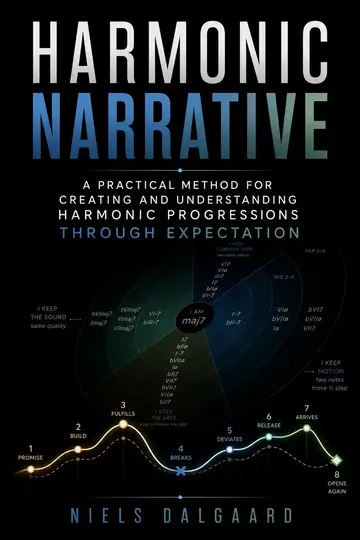
The Jazz Framework gives the method and its order, the Mastering Series turns it into daily practice, and the Expectation Framework studies music from what the listener expects.
Jazz Framework
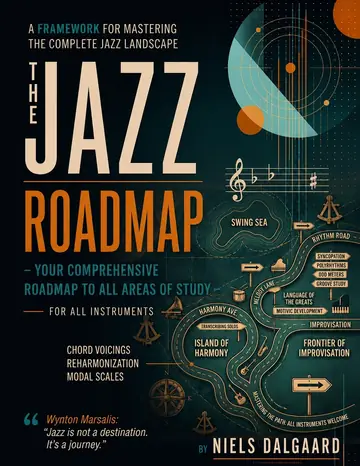
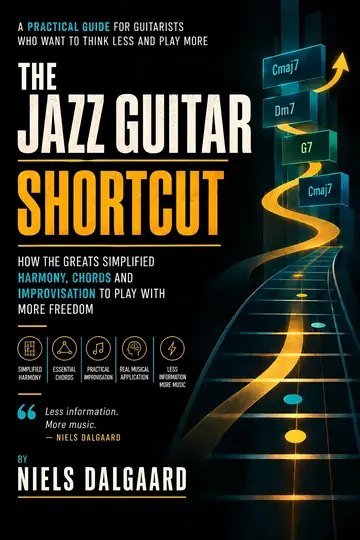
The core method. The Jazz Roadmap puts the whole study in order, Jazz Harmony and Tension and Resolution explain the harmony, and Jazz Guitar Comping and The Jazz Guitar Shortcut take it to the guitar.
Ten structured training programs for jazz guitar. Each volume takes one skill, from triad pairs and voicings to enclosures, comping rhythms and walking bass, and trains it for eight weeks, twenty minutes a day: a fixed daily routine, a Trial by Fire to pass every week, and backing tracks to play over. The theory is in the Jazz Framework; this is where it gets into your hands.
8 weeks per volume
20 minutes a day
A Trial by Fire every week
Backing tracks included
Mastering Triad Pairs
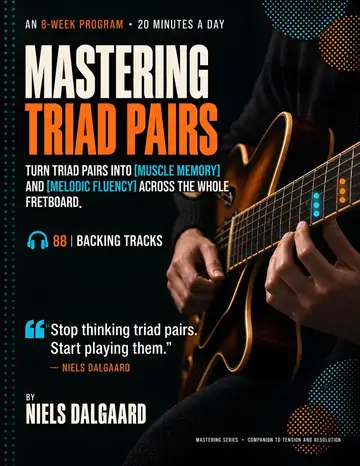
Not a book to read: a program to carry out. Triad pairs, trained over every chord function until your hand finds them on any fret, without looking.
View details
From the whole-step pair to symmetric, minor and hexatonic pairs. A fixed four-block daily routine and a Trial by Fire to pass every week, from modal vamps to the ii–V–I, the jazz blues and rhythm changes. With 88 backing tracks, available through a QR code. The theory is in Tension and Resolution; this is where it gets into your hands.
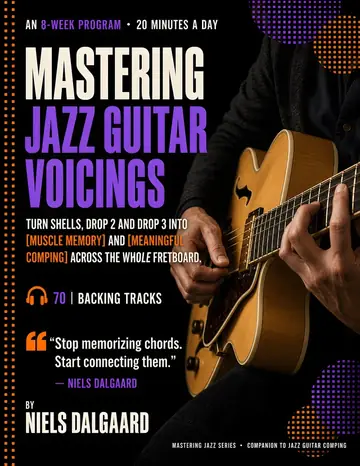
You already know plenty of chords. The problem is that they’re a list. Stop memorizing chords. Start connecting them.
View details
This program turns them into a system: a few shapes, three one-fret rules and a hand that finds the next chord in the same area — shells, guide tones, rootless, drop 2, drop 3, upper structures and fourths, until you comp a whole standard with a plan. A fixed four-block daily routine, a Trial by Fire every week, and 70 backing tracks with double bass and drums.
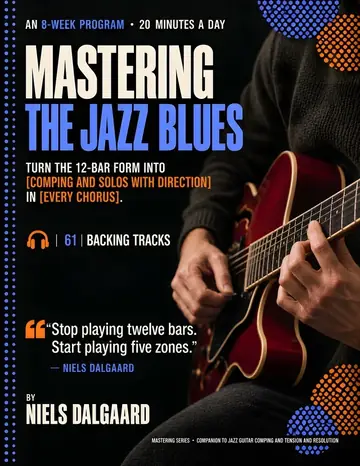
You’ve played the blues forever, but every chorus sounds the same. Stop playing twelve bars. Start playing five zones.
View details
Twelve bars that repeat, at the same density in the comping and in the solo. This program — the only one in the series that brings comping and soloing together — turns the blues into a form with five zones you can hear: the basic and the jazz blues, cells, the bebop scale and arpeggios, tritone substitutions, the minor blues and Parker’s blues, up to four choruses of Blue Monk or Now’s the Time with a plan. A fixed four-block daily routine, a Trial by Fire every week, and 61 backing tracks, without piano for comping and with piano for soloing.
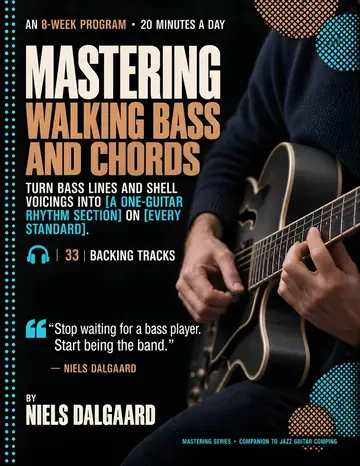
You can comp with chords, but with no bass player the tune has no floor. Stop waiting for a bass player. Start being the band.
View details
The chords float and nobody walks the harmony. This program makes your guitar the rhythm section — the bass in two and walking in four on strings 6 and 5, the shell attached to the bass in a few cells, the off-beat, chromatic descents and turnarounds, up to Autumn Leaves and Satin Doll alone. A fixed four-block daily routine, a Trial by Fire every week, and 33 drums-only tracks.
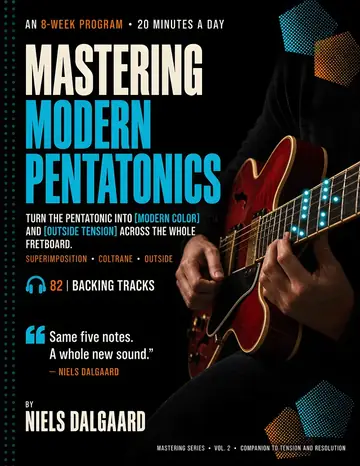
The pentatonic is the scale you have played most. This program teaches you to make the same one sound modern. Same five notes. A whole new sound.
View details
The five shapes across the whole neck, then the right pentatonic over every chord — Dorian, sus, altered, Lydian — through the ii–V–I, the minor ii–V–i and the jazz blues, to Coltrane cells, fourths and going outside on purpose. A fixed four-block daily routine, a Trial by Fire every week, and 82 backing tracks, available through a QR code.
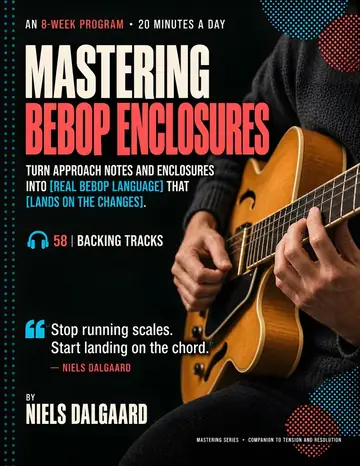
You already know your scales. The problem is that your lines sound like scales. Stop running scales. Start landing on the chord.
View details
The chord tones land anywhere and the chromatic note sounds like a mistake. This program turns it into an arrival — first the target, then the cell: four approach notes and four enclosures you take to any chord tone, the bebop scale that puts the chord tones on the beats, and the 3rd of every new chord on beat 1, up to two choruses of a bebop tune. A fixed four-block daily routine, a Trial by Fire every week, and 58 backing tracks with double bass, drums and piano.
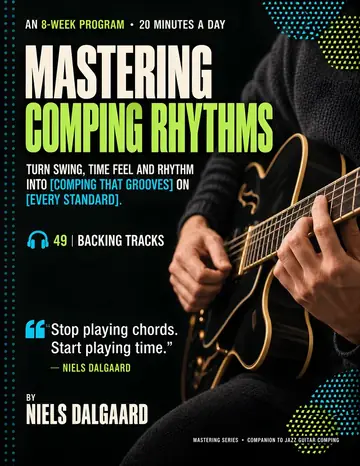
You already know your chords. The problem is where they land. Stop playing chords in time. Start comping with rhythm.
View details
Your comping is chords in time, always at the same density, and the soloist doesn’t know what to expect from you. This program turns it into rhythm with intention — swing with 2 and 4, four cells the listener recognizes, placement, syncopation and anticipation, the delayed arrival, density across a chorus and displacement, up to a swing tune and a bossa comped with a written plan. A fixed four-block daily routine, a Trial by Fire every week, and 49 backing tracks with double bass and drums: the comping is yours.
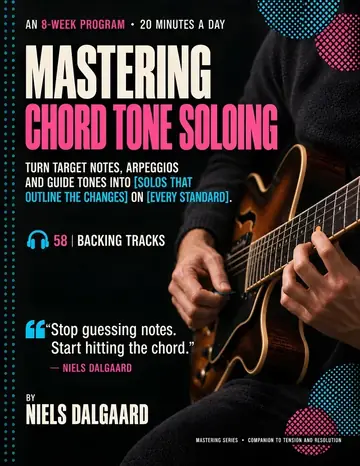
You know your scales, but over the changes the chords can’t be heard in your line. Stop guessing notes. Start hitting the chord.
View details
Every note sounds equally good and none of them says where you are. This program makes the chord tones your map — the 3rd and the 7th on the strong beats, guide tone lines, arpeggios in one position and from the 3rd across the whole neck, the economy of arriving and staying silent, Barry Harris’s pivot arpeggio and upper triads over the dominant, up to Tune Up and Have You Met Miss Jones with your targets written in. A fixed four-block daily routine, a Trial by Fire every week, and 58 backing tracks with double bass, drums and piano.
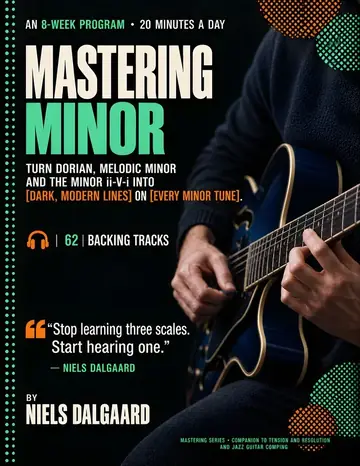
Over a minor chord you always play Dorian, and minor always sounds the same. Stop learning three scales. Start hearing one.
View details
On the i, on the half-diminished ii and on the altered V. This program gives minor its own system: one mother scale, three chords. Dorian and m6, melodic minor over the i, the minor ii-V-i comping and soloing, the altered scale as a melodic minor a half step up, the half-diminished with 9 and Lydian dominant, up to Beautiful Love, Softly and Alone Together. A fixed four-block daily routine, a Trial by Fire every week, and 62 backing tracks.
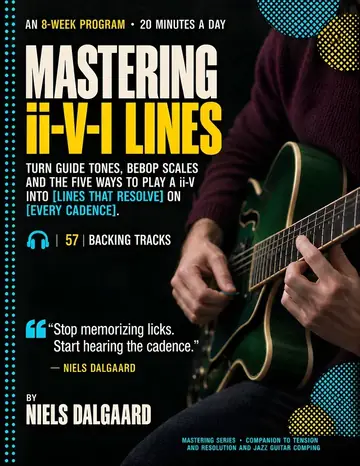
You know a couple of ii-V-I licks in one key. In the other eleven you freeze. Stop memorizing licks. Start hearing the cadence.
View details
And when a tune brings a ii-V in every bar, they all sound the same. This program turns the ii-V-I into a machine with three functions — the ii announces, the V pushes, the I releases: the guide tone skeleton, the bebop scale, the b9 of the pivot arpeggio, four ways to arrive and the late arrival, five ways to play the same ii-V, major and minor, sixteen in a row and Joy Spring. A fixed four-block daily routine, a Trial by Fire every week, and 57 backing tracks.
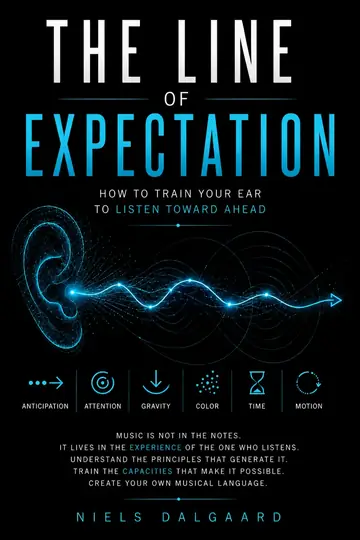
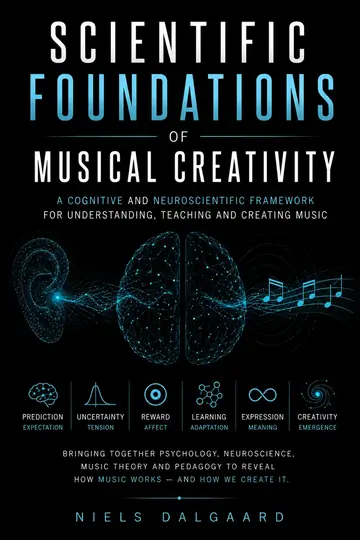
A line of its own: music as expectation. What the listener expects, how tension builds and how it resolves, as a way to hear, analyse and compose, on any instrument.
Guides, analyses and a free eBook, to start today.
New · Free · For blues players
From blues to jazz, in five steps
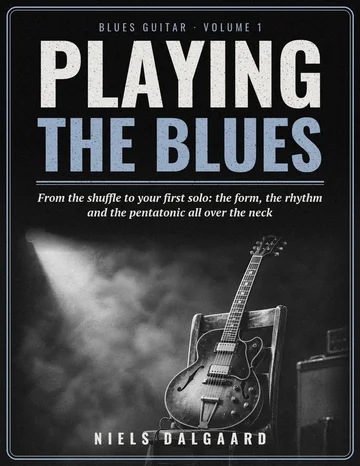
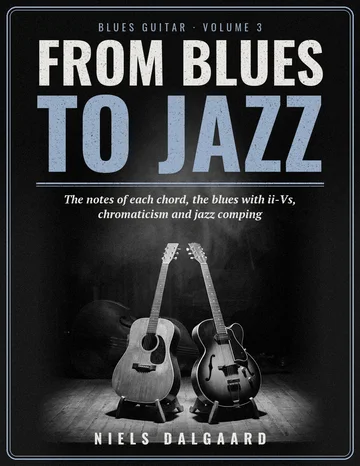
The same twelve bars, five times: from the shuffle you already play to the jazz blues, the minor blues and Charlie Parker’s Bird blues. A backing track in your key for each step, the new chords marked, and what your pentatonic box can do over them — plus the history of the blues in its songs, from Robert Johnson and B.B. King to Coltrane.
123 standards · Your progressions · Ready to print
Every standard's chord chart, as a PDF
The whole progression of each standard, or of the chords you type in, in the key you choose. Free: 1 to try. With the Practice Pass, as many as you like, and the same PDF carries the harmonic analysis, the triad pairs and the suggested pentatonics over each chord.