Bye Bye Blackbird Chord Progression & Harmonic Analysis | Niels Dalgaard

Ray Henderson · 1926 · F major · AABA, 32 bars

Bye Bye Blackbird — Chord Progression & Harmonic Analysis

A tune that lives on the alternation between the tonic and a borrowed minor subdominant. The B♭m6 does not belong to F major, and it is the only reason the second phrase sounds different from the first.

ii-V-I Modal interchange

Chord progression

Analyzed excerpt Valid harmonic variant

Section: A1

Fmaj7 | Fmaj7 | Gm7 C7 | Fmaj7 | Bbm6 | Fmaj7

Sources agree the opening moves between I and ii and disagree about almost everything else. The borrowed minor iv here is a widely played substitution rather than a fixed bar, which is why no bar numbers are given.

This is a short excerpt, not the full chart. The composition dates from 1926 and is old enough that it is very likely in the public domain in the United States, which is why the excerpt runs longer here — but copyright status varies by territory and by edition, so treat that as context, not as legal advice.

The books behind this page

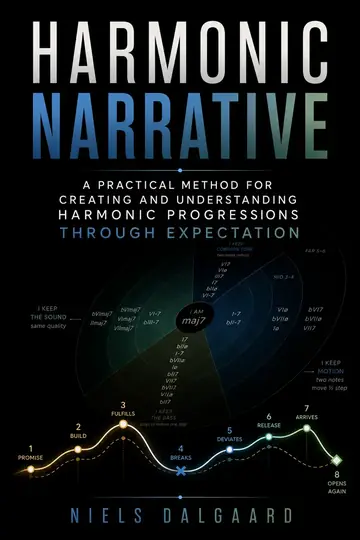
Every one of these tunes is assembled out of the same handful of harmonic resources. Jazz Harmony is those resources, explained in the order in which they build on each other.

Harmonic analysis

Key
F major
Tonal center
F
Confidence
High
Chords analysed
7
ChordRoman numeralFunctionWhat it is doingConfidence
Fmaj7ITonicFmaj7 is the tonic of F. It is where the progression is at rest.High
Gm7iiPredominantGm7 is the ii chord of F: the classic predominant. It prepares the dominant and almost always moves to it.High
C7V7DominantC7 is the dominant of F. Its third and seventh form a tritone, and that tritone is what makes the tonic feel due.High
Fmaj7ITonicFmaj7 is the tonic of F. It is where the progression is at rest.High
Bbm6ivPredominantBbm6 is a minor iv in a major key, borrowed from the parallel minor. Its b6 pulls down into the third of the tonic — one of the most recognisable sounds in the repertoire.Medium
Fmaj7ITonicFmaj7 is the tonic of F. It is where the progression is at rest.High

What the analyzer found in it

ii - V7 - IGm7 - C7 - Fmaj7

A complete ii-V-I in F. Predominant, dominant, tonic: the sentence jazz harmony is built out of.

IV - IBbm6 - Fmaj7

A plagal cadence in F: IV to I, arriving without a leading tone.

High, medium and low next to each numeral are judgements about musical context, not probabilities. A low rating marks a bar that can honestly be read more than one way. How the ratings are decided →

Why this example matters

In F major the excerpt reads I – ii – V7 – iv. Inside those 7 chords there is a complete ii-V-I and a chord borrowed from the parallel mode. Play it slowly with only two voices — the third and seventh of each chord. In C7 those are E and Bb, and watching where that pair goes next tells you more about the progression than the root movement does. The same device turns up in Blues for Alice, All Blues and So What, in other keys and at other tempos.

How the rest of Bye Bye Blackbird goes

A thirty-two-bar song that stays in one key throughout and gets its variety from borrowed chords — minor-quality harmony appearing briefly inside a major key and resolving back — rather than from going anywhere. The melody is built from short phrases with rests between them, which leaves a great deal of room, and the tune is consequently a favourite for arrangements that reshape the rhythm entirely while leaving the harmony alone.

Bye Bye Blackbird on record

Published in 1926, music by Ray Henderson and lyric by Mort Dixon. Miles Davis recorded it in 1957 on ’Round About Midnight, and that version — medium tempo, understated, with the melody stated almost without ornament — is the one modern players work from. It is also the tune that opens the 1986 film Round Midnight, which introduced it to a wider audience.

Analyze this progression

Take these bars into the analyzer and interfere with them. The fastest way to learn what a chord was doing is to remove it and read what the analysis says instead.

Open in Jazz Harmony Analyzer →

Related

← All 100 standards