| Autumn Leaves | B♭ major / G minor | Cm7 | F7 | Bbmaj7 | Ebmaj7 | A complete ii-V-I |
| All The Things You Are | A♭ major | Fm7 | Bbm7 | Eb7 | Abmaj7 | A complete ii-V-I |
| Tune Up | D major | Em7 | A7 | Dmaj7 | Dmaj7 | A complete ii-V-I |
| Solar | C minor | Cm | Gm7 C7 | Fmaj7 | Fm7 Bb7 | Ebmaj7 | A complete ii-V-I |
| Blue Bossa | C minor | Cm7 | Cm7 | Fm7 | Fm7 | Dm7b5 | G7 | Cm7 | Cm7 | A complete ii-V-I |
| Stella by Starlight | B♭ major | Em7b5 | A7 | Cm7 | F7 | An unresolved ii-V and a secondary dominant |
| How High the Moon | G major | Gmaj7 | Gmaj7 | Gm7 | C7 | Fmaj7 | Fmaj7 | Fm7 | Bb7 | A complete ii-V-I and a secondary dominant |
| Ornithology | G major | Gmaj7 | Gm7 C7 | Fmaj7 | Fm7 Bb7 | A complete ii-V-I and a secondary dominant |
| Cherokee | B♭ major | Bbmaj7 | Bbmaj7 | Fm7 Bb7 | Ebmaj7 | A complete ii-V-I |
| Confirmation | F major | Fmaj7 | Em7b5 A7 | Dm7 | Cm7 F7 | A complete ii-V-I |
| Beautiful Love | D minor | Em7b5 | A7 | Dm7 | Dm7 | A complete ii-V-I |
| There Will Never Be Another You | E♭ major | Ebmaj7 | Ebmaj7 | Dm7b5 | G7 | Cm7 | Cm7 | Bbm7 | Eb7 | A complete ii-V-I |
| I Got Rhythm | B♭ major | Bb G7 | Cm7 F7 | Dm7 G7 | Cm7 F7 | Bb Bb7 | Eb Ebm6 | Bb G7 | Cm7 F7 | A complete ii-V-I and a secondary dominant |
| Oleo | B♭ major | Bb G7 | Cm7 F7 | Dm7 G7 | Cm7 F7 | A complete ii-V-I and a secondary dominant |
| Anthropology | B♭ major | Bb G7 | Cm7 F7 | Dm7 G7 | Cm7 F7 | A complete ii-V-I and a secondary dominant |
| Rhythm-a-ning | B♭ major | Bb G7 | Cm7 F7 | Dm7 G7 | Cm7 F7 | A complete ii-V-I and a secondary dominant |
| Moose the Mooche | B♭ major | Bb G7 | Cm7 F7 | Dm7 G7 | Cm7 F7 | A complete ii-V-I and a secondary dominant |
| Now’s the Time | F major | F7 | Bb7 | F7 | F7 | Bb7 | Bb7 | F7 | D7 | Gm7 | C7 | F7 D7 | Gm7 C7 | A complete ii-V-I and a secondary dominant |
| Billie’s Bounce | F major | F7 | Bb7 | F7 | Cm7 F7 | Bb7 | Bdim7 | F7 | D7 | Gm7 | C7 | F7 D7 | Gm7 C7 | A complete ii-V-I and a secondary dominant |
| Blues for Alice | F major | Fmaj7 | Em7b5 A7 | Dm7 G7 | Cm7 F7 | Bb7 | Bbm7 Eb7 | Am7 D7 | Abm7 Db7 | Gm7 | C7 | Fmaj7 D7 | Gm7 C7 | A complete ii-V-I, a secondary dominant, a tritone substitute and a borrowed chord |
| Straight, No Chaser | F major | F7 | Bb7 | F7 | F7 | Bb7 | Bb7 | F7 | F7 | Gm7 | C7 | F7 | C7 | A complete ii-V-I |
| Blue Monk | B♭ major | Bb7 | Eb7 | Bb7 | Bb7 | Eb7 | Edim7 | Bb7 | G7 | Cm7 | F7 | Bb7 G7 | Cm7 F7 | A complete ii-V-I and a secondary dominant |
| Bags’ Groove | F major | F7 | Bb7 | F7 | F7 | Bb7 | Bb7 | F7 | F7 | Gm7 | C7 | F7 D7 | Gm7 C7 | A complete ii-V-I and a secondary dominant |
| Tenor Madness | B♭ major | Bb7 | Eb7 | Bb7 | Fm7 Bb7 | Eb7 | Eb7 | Bb7 | G7 | Cm7 | F7 | Bb7 G7 | Cm7 F7 | A complete ii-V-I and a secondary dominant |
| West Coast Blues | B♭ major | Bbmaj7 | Ebm7 Ab7 | Dbmaj7 | Gbmaj7 | A complete ii-V-I |
| Giant Steps | no single key | Bmaj7 D7 | Gmaj7 Bb7 | Ebmaj7 | Am7 D7 | An unresolved ii-V, a secondary dominant, a borrowed chord and a major-third cycle |
| Countdown | no single key | Em7 F7 | Bbmaj7 Db7 | Gbmaj7 A7 | Dmaj7 | A secondary dominant, a borrowed chord and a major-third cycle |
| Have You Met Miss Jones | F major | Bbmaj7 | Abm7 Db7 | Gbmaj7 | Em7 A7 | Dmaj7 | Abm7 Db7 | Gbmaj7 | Gm7 C7 | A complete ii-V-I |
| Misty | E♭ major | Ebmaj7 | Bbm7 Eb7 | Abmaj7 | Abm7 Db7 | Ebmaj7 | A complete ii-V-I, a backdoor resolution and a borrowed chord |
| The Nearness of You | F major | Fmaj7 | Cm7 F7 | Bbmaj7 | Bbm6 | A complete ii-V-I and a borrowed chord |
| ’Round Midnight | E♭ minor | Ebm7 | Bbm7b5 Eb7 | Abm7 | Db7 | A complete ii-V-I and a borrowed chord |
| Summertime | A minor | Am6 | Bm7b5 E7 | Am6 | A7 | Dm7 | F7 | Bm7b5 E7 | Am6 | A complete ii-V-I, a tritone substitute and a borrowed chord |
| Honeysuckle Rose | F major | Gm7 C7 | Gm7 C7 | Gm7 C7 | F6 | A complete ii-V-I |
| Ain’t Misbehavin’ | E♭ major | Ebmaj7 | Edim7 | Fm7 | Bb7 | Ebmaj7 | A complete ii-V-I, a diminished connector and a turnaround |
| Body and Soul | D♭ major | Ebm7 Ab7 | Dbmaj7 Bbm7 | Ebm7 Ab7 | Dbmaj7 | A complete ii-V-I and a turnaround |
| Georgia on My Mind | F major | F | A7 | Dm7 | F7 | Bb | Bbm | F | D7 | Gm7 C7 | F | A complete ii-V-I and a secondary dominant |
| What Is This Thing Called Love? | C major | Gm7b5 | C7 | Fm6 | Fm6 | Dm7b5 | G7 | Cmaj7 | Cmaj7 | A complete ii-V-I and a borrowed chord |
| Embraceable You | G major | Gmaj7 | E7 | Am7 | D7 | Gmaj7 | A complete ii-V-I and a secondary dominant |
| But Not for Me | E♭ major | Ebmaj7 | Cm7 | Fm7 | Bb7 | Ebmaj7 | A complete ii-V-I and a turnaround |
| Avalon | F major | C7 | C7 | F | F | C7 | C7 | F | F | Plain diatonic motion |
| Ja-Da | C major | C | A7 | Dm7 | G7 | C | A7 | Dm7 | G7 | A complete ii-V-I and a secondary dominant |
| Bye Bye Blackbird | F major | Fmaj7 | Fmaj7 | Gm7 C7 | Fmaj7 | Bbm6 | Fmaj7 | A complete ii-V-I and a borrowed chord |
| Basin Street Blues | B♭ major | Bb | Bdim7 | Cm7 | F7 | Bb | A complete ii-V-I, a diminished connector and a turnaround |
| Whispering | E♭ major | Ebmaj7 | Ebmaj7 | Fm7 | Bb7 | Ebmaj7 | A complete ii-V-I |
| Limehouse Blues | F major | C7 | C7 | C7 | C7 | Fmaj7 | Fmaj7 | Fmaj7 | Fmaj7 | Plain diatonic motion |
| Just You, Just Me | C major | C | C | D7 | D7 | Dm7 | G7 | C | C | A complete ii-V-I and a secondary dominant |
| Softly, as in a Morning Sunrise | C minor | Cm | Dm7b5 G7 | Cm | Fm7 | Cm | Dm7b5 G7 | Cm | Dm7b5 G7 | A complete ii-V-I |
| Mack the Knife | B♭ major | Bb | Cm7 F7 | Bb | Cm7 F7 | Bb | Cm7 F7 | Bb | A complete ii-V-I |
| Blue Moon | C major | Cmaj7 | Am7 | Dm7 | G7 | Cmaj7 | A complete ii-V-I and a turnaround |
| Fly Me to the Moon | C major | Am7 | Dm7 | G7 | Cmaj7 | A complete ii-V-I |
| Days of Wine and Roses | F major | Fmaj7 | Eb7 | Am7 D7 | Gm7 | A complete ii-V-I, a secondary dominant and a borrowed chord |
| Afternoon in Paris | C major | Cmaj7 | Cm7 F7 | Bbmaj7 | Bbm7 Eb7 | Abmaj7 | A complete ii-V-I |
| Satin Doll | C major | Dm7 G7 | Dm7 G7 | Em7 A7 | Em7 A7 | Am7 D7 | Abm7 Db7 | Cmaj7 | An unresolved ii-V, a secondary dominant and a tritone substitute |
| Take the "A" Train | C major | Cmaj7 | Cmaj7 | D7 | D7 | Dm7 | G7 | Cmaj7 | Cmaj7 | A complete ii-V-I and a secondary dominant |
| Caravan | F minor | C7 | C7 | C7 | C7 | C7 | C7 | Fm | Fm | Plain diatonic motion |
| A Night in Tunisia | D minor | Eb7 | Dm7 | Eb7 | Dm7 | Eb7 | Dm7 | Em7b5 A7 | Dm7 | A complete ii-V-I and a tritone substitute |
| Perdido | B♭ major | Bb6 | Bb6 | Cm7 F7 | Bb6 | A complete ii-V-I |
| Scrapple from the Apple | F major | F D7 | Gm7 C7 | Am7 D7 | Gm7 C7 | A complete ii-V-I and a secondary dominant |
| Recorda Me | A minor | Am7 | Am7 | Cm7 F7 | Bbmaj7 | Bbm7 Eb7 | Abmaj7 | A complete ii-V-I |
| Black Orpheus | A minor | Am | Bm7b5 E7 | Am | Bm7b5 E7 | Am | Dm7 G7 | Cmaj7 | A complete ii-V-I |
| Bluesette | B♭ major | Bbmaj7 | Am7b5 D7 | Gm7 | Gm7 | Cm7 F7 | Bbmaj7 | A complete ii-V-I |
| I Got Plenty o’ Nuttin’ | B♭ major | Bb | G7 | Cm7 | F7 | Bb | A complete ii-V-I and a secondary dominant |
 Start here
Project 03 · Harmony
Start here
Project 03 · Harmony
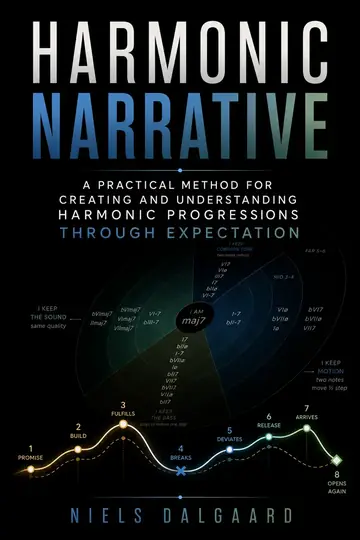 Project 05 · Harmony
 Project 04 · Jazz guitar