Kurt Weill · 1928 · B♭ major · 16 bars
Tonic and ii-V, alternating, for sixteen bars, and then the whole thing moves up a semitone for the next chorus. A tune that proves modulation can be a rhetorical device with no harmonic preparation at all.
Analyzed excerpt
Section: A · Bars 1–7
Bb | Cm7 F7 | Bb | Cm7 F7 | Bb | Cm7 F7 | Bb
This is a short excerpt, not the full chart. The composition dates from 1928 and is old enough that it is very likely in the public domain in the United States, which is why the excerpt runs longer here — but copyright status varies by territory and by edition, so treat that as context, not as legal advice.
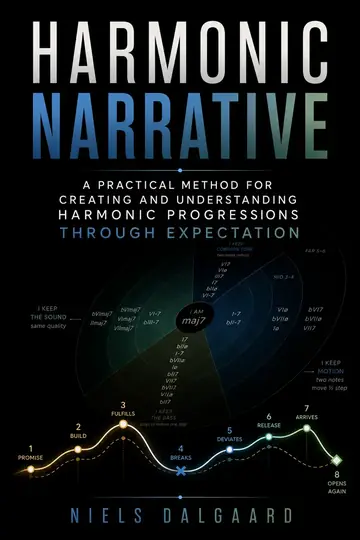
Every one of these tunes is assembled out of the same handful of harmonic resources. Jazz Harmony is those resources, explained in the order in which they build on each other.

| Chord | Roman numeral | Function | What it is doing | Confidence |
|---|---|---|---|---|
| Bb | I | Tonic | Bb is the tonic of Bb. It is where the progression is at rest. | High |
| Cm7 | ii | Predominant | Cm7 is the ii chord of Bb: the classic predominant. It prepares the dominant and almost always moves to it. | High |
| F7 | V7 | Dominant | F7 is the dominant of Bb. Its third and seventh form a tritone, and that tritone is what makes the tonic feel due. | High |
| Bb | I | Tonic | Bb is the tonic of Bb. It is where the progression is at rest. | High |
| Cm7 | ii | Predominant | Cm7 is the ii chord of Bb: the classic predominant. It prepares the dominant and almost always moves to it. | High |
| F7 | V7 | Dominant | F7 is the dominant of Bb. Its third and seventh form a tritone, and that tritone is what makes the tonic feel due. | High |
| Bb | I | Tonic | Bb is the tonic of Bb. It is where the progression is at rest. | High |
| Cm7 | ii | Predominant | Cm7 is the ii chord of Bb: the classic predominant. It prepares the dominant and almost always moves to it. | High |
| F7 | V7 | Dominant | F7 is the dominant of Bb. Its third and seventh form a tritone, and that tritone is what makes the tonic feel due. | High |
| Bb | I | Tonic | Bb is the tonic of Bb. It is where the progression is at rest. | High |
A complete ii-V-I in Bb. Predominant, dominant, tonic: the sentence jazz harmony is built out of.
The progression closes with an authentic cadence in Bb.
High, medium and low next to each numeral are judgements about musical context, not probabilities. A low rating marks a bar that can honestly be read more than one way. How the ratings are decided →
Numbered against Bb major, the excerpt is I – ii – V7. Inside those 10 chords there is a complete ii-V-I. Take the roots away and keep the third and seventh. In F7 that is A and Eb. Those two notes decide where the progression is going, and hearing them move is worth more than naming the chords. Autumn Leaves, All The Things You Are and Tune Up use the same device, which is the argument for learning it once properly rather than three times by accident.
Built on a very short repeating harmonic cycle — essentially a turnaround — restated for the whole form, which is why performances almost always modulate upward between choruses to create the progression the harmony does not supply. Those key changes are part of the performance tradition rather than the composition, and a group playing it needs to agree in advance on how many and where.
Kurt Weill wrote it in 1928 for The Threepenny Opera, to a Bertolt Brecht text, as a ballad about a murderer. It became an American pop hit three decades later through Bobby Darin, whose 1959 version with its escalating key changes is the model for almost every jazz performance since — including Ella Fitzgerald’s celebrated 1960 Berlin recording, in which she forgets the words and improvises a replacement lyric.
Open these chords in the analyzer and change them. Move one chord, substitute a dominant, take the ii away — the reading updates and tells you what you just did.
What this device is, and the other standards in the library that use it.
Read →Joseph Kosma · 1945 · B♭ major / G minor
Chord progression →Jerome Kern · 1939 · A♭ major
Chord progression →Miles Davis · 1953 · D major
Chord progression →The families every standard is assembled from, with examples from the library.
Read →