Jimmy Cox · 1923 · C major · 16 bars
A blues in feeling that is not a blues in form. Every chord in the first four bars is a dominant aimed at the next, and the borrowed minor iv in bar four is where the sadness actually lives.
Analyzed excerpt
Section: A · Bars 1–8
C E7 | A7 | Dm7 | F Fm | C A7 | D7 G7 | C
This is a short excerpt, not the full chart. The composition dates from 1923 and is old enough that it is very likely in the public domain in the United States, which is why the excerpt runs longer here — but copyright status varies by territory and by edition, so treat that as context, not as legal advice.
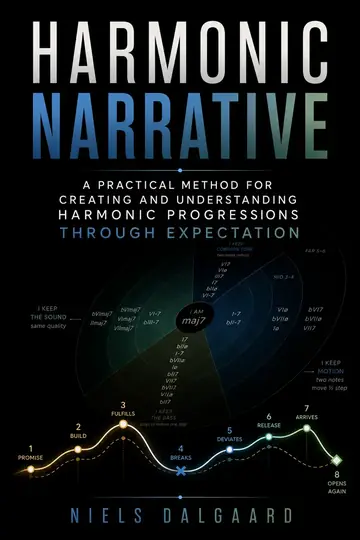
Every one of these tunes is assembled out of the same handful of harmonic resources. Jazz Harmony is those resources, explained in the order in which they build on each other.
| Chord | Roman numeral | Function | What it is doing | Confidence |
|---|---|---|---|---|
| C | I | Tonic | C is the tonic of C. It is where the progression is at rest. | High |
| E7 | V7/vi | Dominant | E7 is functioning as V7/vi: a secondary dominant. It is the dominant of A, not of the home key, so it borrows the pull of a V-I and points it at vi instead. | High |
| A7 | V7/ii | Dominant | A7 is functioning as V7/ii: a secondary dominant. It is the dominant of D, not of the home key, so it borrows the pull of a V-I and points it at ii instead. | High |
| Dm7 | ii | Predominant | Dm7 is the ii chord of C: the classic predominant. It prepares the dominant and almost always moves to it. | High |
| F | IV | Predominant | F is the IV chord of C: subdominant. It moves away from the tonic without creating the pull of a dominant. | High |
| Fm | iv | Predominant | Fm is a minor iv in a major key, borrowed from the parallel minor. Its b6 pulls down into the third of the tonic — one of the most recognisable sounds in the repertoire. | Medium |
| C | I | Tonic | C is the tonic of C. It is where the progression is at rest. | High |
| A7 | V7/ii | Dominant | A7 is functioning as V7/ii: a secondary dominant. It is the dominant of D, not of the home key, so it borrows the pull of a V-I and points it at ii instead. | High |
| D7 | V7/V | Dominant | D7 is functioning as V7/V: a secondary dominant. It is the dominant of G, not of the home key, so it borrows the pull of a V-I and points it at V instead. | High |
| G7 | V7 | Dominant | G7 is the dominant of C. Its third and seventh form a tritone, and that tritone is what makes the tonic feel due. | High |
| C | I | Tonic | C is the tonic of C. It is where the progression is at rest. | High |

The progression closes with an authentic cadence in C.
High, medium and low next to each numeral are judgements about musical context, not probabilities. A low rating marks a bar that can honestly be read more than one way. How the ratings are decided →
Numbered against C major, the excerpt is I – V7/vi – V7/ii – ii – IV – iv – V7/V – V7. Inside those 11 chords there is at least one secondary dominant. Take the roots away and keep the third and seventh. In E7 that is Ab and D. Those two notes decide where the progression is going, and hearing them move is worth more than naming the chords. Stella by Starlight, How High the Moon and Ornithology use the same device, which is the argument for learning it once properly rather than three times by accident.
A sixteen-bar form rather than twelve, and although it is called a blues it works by a chain of secondary dominants moving around the cycle rather than by the blues’ three-chord scheme. The harmony is therefore much richer than the genre label suggests, and the piece sits closer to the popular songs of its decade than to the country blues. The extra four bars change the phrasing entirely — a lyric line gets room to finish that a twelve-bar form would cut off.
Jimmy Cox wrote it in 1923, before the crash it is usually associated with. Bessie Smith’s 1929 recording, made months after the crash, is the one that fixed its meaning — the timing turned a song about a rich man’s reversal into a document of the moment. It has been recorded across genres ever since, and most versions descend from hers rather than from the sheet.
Open these chords in the analyzer and change them. Move one chord, substitute a dominant, take the ii away — the reading updates and tells you what you just did.
What this device is, and the other standards in the library that use it.
Read →Victor Young · 1944 · B♭ major
Chord progression →Morgan Lewis · 1940 · G major
Chord progression →Charlie Parker · 1946 · G major
Chord progression →The families every standard is assembled from, with examples from the library.
Read →