| Stella by Starlight | B♭ major | Em7b5 | A7 | Cm7 | F7 | An unresolved ii-V and a secondary dominant |
| How High the Moon | G major | Gmaj7 | Gmaj7 | Gm7 | C7 | Fmaj7 | Fmaj7 | Fm7 | Bb7 | A complete ii-V-I and a secondary dominant |
| Ornithology | G major | Gmaj7 | Gm7 C7 | Fmaj7 | Fm7 Bb7 | A complete ii-V-I and a secondary dominant |
| Cherokee | B♭ major | Bbmaj7 | Bbmaj7 | Fm7 Bb7 | Ebmaj7 | A complete ii-V-I |
| Confirmation | F major | Fmaj7 | Em7b5 A7 | Dm7 | Cm7 F7 | A complete ii-V-I |
| There Will Never Be Another You | E♭ major | Ebmaj7 | Ebmaj7 | Dm7b5 | G7 | Cm7 | Cm7 | Bbm7 | Eb7 | A complete ii-V-I |
| I Got Rhythm | B♭ major | Bb G7 | Cm7 F7 | Dm7 G7 | Cm7 F7 | Bb Bb7 | Eb Ebm6 | Bb G7 | Cm7 F7 | A complete ii-V-I and a secondary dominant |
| The Rhythm Changes Bridge | B♭ major | D7 | D7 | G7 | G7 | C7 | C7 | F7 | F7 | A secondary dominant |
| Oleo | B♭ major | Bb G7 | Cm7 F7 | Dm7 G7 | Cm7 F7 | A complete ii-V-I and a secondary dominant |
| Anthropology | B♭ major | Bb G7 | Cm7 F7 | Dm7 G7 | Cm7 F7 | A complete ii-V-I and a secondary dominant |
| Rhythm-a-ning | B♭ major | Bb G7 | Cm7 F7 | Dm7 G7 | Cm7 F7 | A complete ii-V-I and a secondary dominant |
| Moose the Mooche | B♭ major | Bb G7 | Cm7 F7 | Dm7 G7 | Cm7 F7 | A complete ii-V-I and a secondary dominant |
| Now’s the Time | F major | F7 | Bb7 | F7 | F7 | Bb7 | Bb7 | F7 | D7 | Gm7 | C7 | F7 D7 | Gm7 C7 | A complete ii-V-I and a secondary dominant |
| Billie’s Bounce | F major | F7 | Bb7 | F7 | Cm7 F7 | Bb7 | Bdim7 | F7 | D7 | Gm7 | C7 | F7 D7 | Gm7 C7 | A complete ii-V-I and a secondary dominant |
| Blues for Alice | F major | Fmaj7 | Em7b5 A7 | Dm7 G7 | Cm7 F7 | Bb7 | Bbm7 Eb7 | Am7 D7 | Abm7 Db7 | Gm7 | C7 | Fmaj7 D7 | Gm7 C7 | A complete ii-V-I, a secondary dominant, a tritone substitute and a borrowed chord |
| Blue Monk | B♭ major | Bb7 | Eb7 | Bb7 | Bb7 | Eb7 | Edim7 | Bb7 | G7 | Cm7 | F7 | Bb7 G7 | Cm7 F7 | A complete ii-V-I and a secondary dominant |
| Bags’ Groove | F major | F7 | Bb7 | F7 | F7 | Bb7 | Bb7 | F7 | F7 | Gm7 | C7 | F7 D7 | Gm7 C7 | A complete ii-V-I and a secondary dominant |
| Tenor Madness | B♭ major | Bb7 | Eb7 | Bb7 | Fm7 Bb7 | Eb7 | Eb7 | Bb7 | G7 | Cm7 | F7 | Bb7 G7 | Cm7 F7 | A complete ii-V-I and a secondary dominant |
| Freddie Freeloader | B♭ major | Bb7 | Eb7 | Bb7 | Bb7 | Eb7 | Eb7 | Bb7 | Bb7 | F7 | Eb7 | Ab7 | Bb7 | A secondary dominant |
| Maiden Voyage | no single key | D7sus4 | D7sus4 | F7sus4 | F7sus4 | A secondary dominant and a borrowed chord |
| Giant Steps | no single key | Bmaj7 D7 | Gmaj7 Bb7 | Ebmaj7 | Am7 D7 | An unresolved ii-V, a secondary dominant, a borrowed chord and a major-third cycle |
| Countdown | no single key | Em7 F7 | Bbmaj7 Db7 | Gbmaj7 A7 | Dmaj7 | A secondary dominant, a borrowed chord and a major-third cycle |
| The Girl from Ipanema | F major | Fmaj7 | Fmaj7 | G7 | G7 | Gm7 | Gb7 | Fmaj7 | Gb7 | A secondary dominant and a tritone substitute |
| Desafinado | F major | Fmaj7 | G7 | Gm7 | Gb7 | A secondary dominant and a tritone substitute |
| Misty | E♭ major | Ebmaj7 | Bbm7 Eb7 | Abmaj7 | Abm7 Db7 | Ebmaj7 | A complete ii-V-I, a backdoor resolution and a borrowed chord |
| The Nearness of You | F major | Fmaj7 | Cm7 F7 | Bbmaj7 | Bbm6 | A complete ii-V-I and a borrowed chord |
| ’Round Midnight | E♭ minor | Ebm7 | Bbm7b5 Eb7 | Abm7 | Db7 | A complete ii-V-I and a borrowed chord |
| Sweet Georgia Brown | F major | D7 | D7 | D7 | D7 | G7 | G7 | G7 | G7 | C7 | C7 | C7 | C7 | F6 | F6 | F6 | F6 | A secondary dominant |
| Georgia on My Mind | F major | F | A7 | Dm7 | F7 | Bb | Bbm | F | D7 | Gm7 C7 | F | A complete ii-V-I and a secondary dominant |
| On the Sunny Side of the Street | C major | C | C | C7 | C7 | F | F | C | C | Plain diatonic motion |
| Embraceable You | G major | Gmaj7 | E7 | Am7 | D7 | Gmaj7 | A complete ii-V-I and a secondary dominant |
| Back Home Again in Indiana | F major | F | F | F7 | F7 | Bb | Bbm | F | D7 | G7 | G7 | C7 | C7 | F | A secondary dominant |
| Five Foot Two, Eyes of Blue | C major | C | C | E7 | E7 | A7 | A7 | D7 | D7 | G7 | G7 | C | C | A secondary dominant |
| Ja-Da | C major | C | A7 | Dm7 | G7 | C | A7 | Dm7 | G7 | A complete ii-V-I and a secondary dominant |
| Nobody Knows You When You’re Down and Out | C major | C E7 | A7 | Dm7 | F Fm | C A7 | D7 G7 | C | A secondary dominant |
| It Had to Be You | G major | G | G | E7 | E7 | A7 | A7 | A7 | D7 | A secondary dominant |
| Just You, Just Me | C major | C | C | D7 | D7 | Dm7 | G7 | C | C | A complete ii-V-I and a secondary dominant |
| All of Me | C major | C | C | E7 | E7 | A7 | A7 | Dm7 | Dm7 | A secondary dominant |
| Days of Wine and Roses | F major | Fmaj7 | Eb7 | Am7 D7 | Gm7 | A complete ii-V-I, a secondary dominant and a borrowed chord |
| On Green Dolphin Street | C major | Cmaj7 | Cmaj7 | Cm7 | Cm7 | D7/C | Dbmaj7/C | Cmaj7 | Cmaj7 | A secondary dominant and a borrowed chord |
| Satin Doll | C major | Dm7 G7 | Dm7 G7 | Em7 A7 | Em7 A7 | Am7 D7 | Abm7 Db7 | Cmaj7 | An unresolved ii-V, a secondary dominant and a tritone substitute |
| Take the "A" Train | C major | Cmaj7 | Cmaj7 | D7 | D7 | Dm7 | G7 | Cmaj7 | Cmaj7 | A complete ii-V-I and a secondary dominant |
| Scrapple from the Apple | F major | F D7 | Gm7 C7 | Am7 D7 | Gm7 C7 | A complete ii-V-I and a secondary dominant |
| Donna Lee | A♭ major | Ab | Ab | Ab7 | Ab7 | Db | Dbm | Ab | F7 | A secondary dominant |
| I Got Plenty o’ Nuttin’ | B♭ major | Bb | G7 | Cm7 | F7 | Bb | A complete ii-V-I and a secondary dominant |
 Start here
Project 03 · Harmony
Start here
Project 03 · Harmony
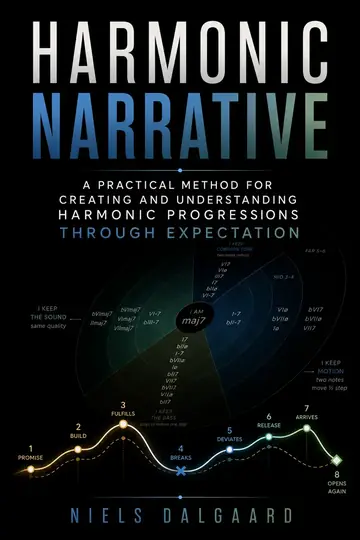 Project 05 · Harmony
 Project 04 · Jazz guitar