Summertime Chord Progression & Harmonic Analysis | Niels Dalgaard

George Gershwin · 1935 · A minor · 16 bars

Summertime — Chord Progression & Harmonic Analysis

A tonic that barely moves, rocked by a minor ii-V that keeps arriving and never resolves anywhere new. The one real event is bar 4 turning the tonic into a dominant so it can tip the piece onto its own iv.

ii-V-I Tritone substitution Modal interchange

Chord progression

Analyzed excerpt

Section: A · Bars 1–8

Am6 | Bm7b5 E7 | Am6 | A7 | Dm7 | F7 | Bm7b5 E7 | Am6

This is a short excerpt quoted for analysis, not the full chart, and this composition is very likely still in copyright. Published versions and recordings disagree with each other about the rest of the tune, and often about these bars too.

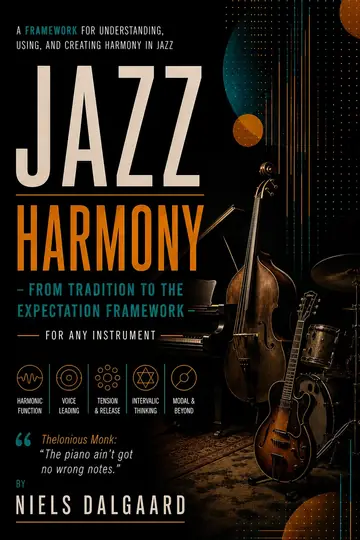
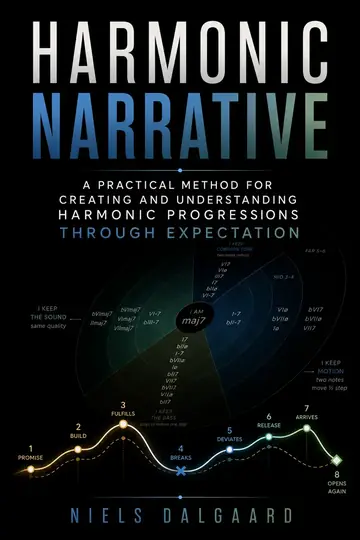
The books behind this page

Every one of these tunes is assembled out of the same handful of harmonic resources. Jazz Harmony is those resources, explained in the order in which they build on each other.

Harmonic analysis

Key
A minor
Tonal center
A
Confidence
High
Chords analysed
10
ChordRoman numeralFunctionWhat it is doingConfidence
Am6iTonicAm6 is the tonic of Am. It is where the progression is at rest.High
Bm7b5iiøPredominantBm7b5 is the iiø7 of Am: the predominant of a minor key.High
E7V7DominantE7 is the dominant of Am. In a minor key it borrows its major third from harmonic minor — that raised note is the leading tone.High
Am6iTonicAm6 is the tonic of Am. It is where the progression is at rest.High
A7I7TonicA7 is the tonic, but built as a dominant seventh — the sound that defines the blues. The tonic keeps a b7 and stays at home anyway. Also readable as V7/iv.Medium
Dm7ivPredominantDm7 is the iv chord of Am: the minor subdominant.High
F7subV7/VDominantF7 is a tritone substitute — subV7/V. It carries the same tritone as B7, the real dominant of E, but resolves down a semitone instead of down a fifth.Low
Bm7b5iiøPredominantBm7b5 is the iiø7 of Am: the predominant of a minor key.High
E7V7DominantE7 is the dominant of Am. In a minor key it borrows its major third from harmonic minor — that raised note is the leading tone.High
Am6iTonicAm6 is the tonic of Am. It is where the progression is at rest.High

What the analyzer found in it

iiø - V7 - iBm7b5 - E7 - Am6

A complete minor ii-V-i in Am, with the half-diminished ii and a dominant that borrows its leading tone from harmonic minor.

iiø - V7 - iBm7b5 - E7 - Am6

A complete minor ii-V-i in Am, with the half-diminished ii and a dominant that borrows its leading tone from harmonic minor.

V - IE7 - Am6

The progression closes with an authentic cadence in Am.

High, medium and low next to each numeral are judgements about musical context, not probabilities. A low rating marks a bar that can honestly be read more than one way. How the ratings are decided →

Why this example matters

Numbered against A minor, the excerpt is i – iiø – V7 – I7 – iv – subV7/V. Inside those 10 chords there is a complete ii-V-I, a tritone substitute and a chord borrowed from the parallel mode. Take the roots away and keep the third and seventh. In E7 that is Ab and D. Those two notes decide where the progression is going, and hearing them move is worth more than naming the chords. Blues for Alice, All Blues and So What use the same device, which is the argument for learning it once properly rather than three times by accident.

How the rest of Summertime goes

Sixteen bars rather than thirty-two, in minor, with a harmony so spare that most of the piece alternates between two chords. That sparseness is why it is played by everyone from beginners to the most harmonically adventurous — there is almost nothing to get wrong and almost nothing to lean on. The one structural event is the move to the relative major in the second half, which lifts the piece briefly before it settles back. Most jazz versions add substitutions the score does not have; the score itself is nearly bare.

Summertime on record

Gershwin wrote it for the 1935 opera Porgy and Bess, with a lyric by DuBose Heyward, as a lullaby sung in the first scene. It has since been recorded more times than almost any song in the American repertoire, in every genre. Miles Davis and Gil Evans recorded an orchestral version in 1958 that treats it as a piece of composition rather than as a vehicle, and it is the version most often held up against the many casual ones.

Analyze this progression

Open these chords in the analyzer and change them. Move one chord, substitute a dominant, take the ii away — the reading updates and tells you what you just did.

Open in Jazz Harmony Analyzer →

Related

← All 100 standards