Cherokee Chord Progression & Harmonic Analysis | Niels Dalgaard

Ray Noble · 1938 · B♭ major · AABA, 64 bars

Cherokee — Chord Progression & Harmonic Analysis

The A section is calm; the bridge is the reason players are afraid of it. It walks ii-V-I through four keys a semitone apart at a tempo that leaves no time to think, which is why it became the bebop proving ground.

ii-V-I Secondary dominants

Chord progression

Analyzed excerpt

Section: A1 · Bars 1–4

Bbmaj7 | Bbmaj7 | Fm7 Bb7 | Ebmaj7

This is a short excerpt quoted for analysis, not the full chart, and this composition is very likely still in copyright. Published versions and recordings disagree with each other about the rest of the tune, and often about these bars too.

The books behind this page

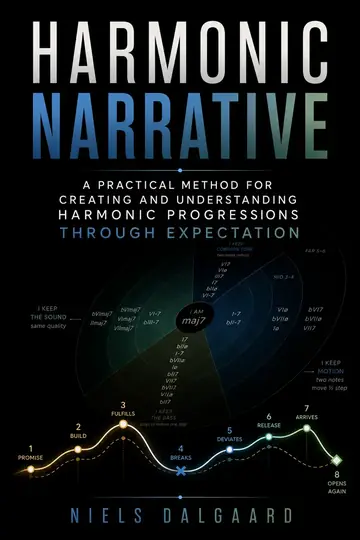
Every one of these tunes is assembled out of the same handful of harmonic resources. Jazz Harmony is those resources, explained in the order in which they build on each other.

Harmonic analysis

Key
Bb major
Tonal center
Bb
Confidence
Low
Chords analysed
5

Read in Bb major, the key of the tune. Taken on its own, with nothing around it, this excerpt is just as easy to hear in Eb major — a few bars are often not enough to fix a tonic, and that ambiguity is a real property of the music rather than a gap in the analysis.

ChordRoman numeralFunctionWhat it is doingConfidence
Bbmaj7ITonicBbmaj7 is the tonic of Bb. It is where the progression is at rest.High
Fm7ii/IVPredominantFm7 is the ii of a secondary ii-V. Together with Bb7 it prepares Eb, so the pair tonicizes IV without leaving the key.High
Bb7I7TonicBb7 is the tonic, but built as a dominant seventh — the sound that defines the blues. The tonic keeps a b7 and stays at home anyway. Also readable as V7/IV.Medium
Ebmaj7IVPredominantEbmaj7 is the IV chord of Bb: subdominant. It moves away from the tonic without creating the pull of a dominant.High

What the analyzer found in it

ii/IV - I7 - IVFm7 - Bb7 - Ebmaj7

A complete ii-V-I in Eb. Predominant, dominant, tonic: the sentence jazz harmony is built out of.

High, medium and low next to each numeral are judgements about musical context, not probabilities. A low rating marks a bar that can honestly be read more than one way. How the ratings are decided →

Why this example matters

In Bb major the excerpt reads I – ii/IV – I7 – IV. Inside those 5 chords there is a complete ii-V-I. Play it slowly with only two voices — the third and seventh of each chord. In Bb7 those are D and Ab, and watching where that pair goes next tells you more about the progression than the root movement does. The same device turns up in Autumn Leaves, All The Things You Are and Tune Up, in other keys and at other tempos.

How the rest of Cherokee goes

Sixty-four bars rather than thirty-two, which doubles everything and is the first thing to know before calling it. The A sections stay close to home and are not the difficulty. The bridge is: it steps up to B major, a key with almost nothing in common with the B♭ the tune lives in, then descends through a series of ii-V cadences a whole tone apart until it arrives back at the dominant. At the tempos this tune attracts, that bridge is sixteen bars of unfamiliar keys arriving faster than most players can name them, and it is the reason Cherokee is treated as a rite of passage rather than a standard.

Cherokee on record

Ray Noble, an English bandleader, wrote it in 1938 as part of an orchestral suite, and it became a swing-era hit for Charlie Barnet. Its place in jazz history comes from Charlie Parker, who described working on it in a Harlem chili house in 1939 and finding that building lines from the upper intervals of the chords let him play what he had been hearing. Parker’s “Ko-Ko”, recorded in 1945, is a contrafact on this form and takes the bridge at a tempo that made the point permanently.

Analyze this progression

Take these bars into the analyzer and interfere with them. The fastest way to learn what a chord was doing is to remove it and read what the analysis says instead.

Open in Jazz Harmony Analyzer →

Related

← All 100 standards