Giant Steps Chord Progression & Harmonic Analysis | Niels Dalgaard

John Coltrane · 1960 · no single key · 16 bars

Giant Steps — Chord Progression & Harmonic Analysis

Three tonics a major third apart, dividing the octave into equal parts, each one reached by its own dominant. No key contains all of it, so a key-detection engine has to say so rather than pick one — and this analyzer does.

Modal interchange ii-V-I Secondary dominants

Chord progression

Analyzed excerpt

Section: A · Bars 1–4

Bmaj7 D7 | Gmaj7 Bb7 | Ebmaj7 | Am7 D7

This is a short excerpt quoted for analysis, not the full chart, and this composition is very likely still in copyright. Published versions and recordings disagree with each other about the rest of the tune, and often about these bars too.

The books behind this page

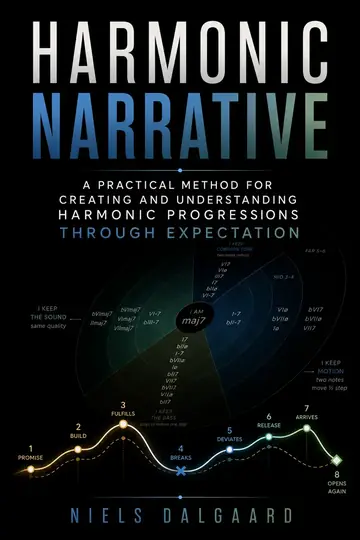
Every one of these tunes is assembled out of the same handful of harmonic resources. Jazz Harmony is those resources, explained in the order in which they build on each other.

Harmonic analysis

Key
G major
Tonal center
G
Confidence
High
Chords analysed
7
ChordRoman numeralFunctionWhat it is doingConfidence
Bmaj7IIIChromaticBmaj7 is a chromatic mediant of G — a major chord a third away, sharing one note and belonging to no shared key. It moves the harmony sideways rather than forward.Low
D7V7DominantD7 is the dominant of G. Its third and seventh form a tritone, and that tritone is what makes the tonic feel due.High
Gmaj7ITonicGmaj7 is the tonic of G. It is where the progression is at rest.High
Bb7V7/bVIDominantBb7 is functioning as V7/bVI: a secondary dominant. It is the dominant of D#, not of the home key, so it borrows the pull of a V-I and points it at bVI instead.High
Ebmaj7bVIModal interchangeEbmaj7 is bVI, borrowed from the parallel minor. It is the most common modal interchange chord in the repertoire after minor iv.Medium
Am7iiPredominantAm7 is the ii chord of G: the classic predominant. It prepares the dominant and almost always moves to it.High
D7V7DominantD7 is the dominant of G. Its third and seventh form a tritone, and that tritone is what makes the tonic feel due.High

What the analyzer found in it

major-third cycleD7 - Gmaj7 - Bb7

Roots moving by major thirds, dividing the octave into three equal parts. This is the Coltrane-changes device: no single key contains it, and each dominant tonicizes its own target.

ii - V7Am7 - D7

A ii-V pointing at G, which never arrives. The preparation is complete, the resolution is not.

half cadenceD7

The progression stops on the dominant of G — a half cadence. It is unfinished on purpose.

modal interchangeEbmaj7

Modal interchange: Ebmaj7 come from the parallel mode of G, not from the key itself.

High, medium and low next to each numeral are judgements about musical context, not probabilities. A low rating marks a bar that can honestly be read more than one way. How the ratings are decided →

Why this example matters

Read in G major, these bars come out as III – V7 – I – V7/bVI – bVI – ii. Inside those 7 chords there is a ii-V that is left unresolved, at least one secondary dominant, a chord borrowed from the parallel mode and roots moving by major thirds. The shortest way in is a two-voice reduction: third and seventh only, slowly. D7 contributes F# and C, and where that pair resolves is the whole story of the passage. You will meet the same move again in Autumn Leaves, All The Things You Are and Tune Up, transposed and at a different pace.

How the rest of Giant Steps goes

Sixteen bars containing three tonal centres spaced a major third apart, cycled through twice, with a cadence arriving roughly every two beats at the tempo it is usually taken. The excerpt on this page shows the mechanism; the rest of the form is the same mechanism continuing. What makes it hard is not any individual chord — every cadence in it is ordinary — but the rate. There is no bar in which to think, so the tune can only be played from material prepared in advance, and that is precisely what it was designed to expose.

Giant Steps on record

Recorded by John Coltrane in 1959 and released in 1960 as the title track of the album that marks the end of his work on this kind of harmony. The take that was issued famously features a pianist struggling with the changes, which has been discussed for decades and is arguably the most instructive part of the record. The three-key scheme is now called “Coltrane changes” and gets applied as a substitution over other tunes.

Analyze this progression

The excerpt is loaded and editable. Swap a chord for its tritone substitute, delete the preparation, borrow one from the parallel minor, and watch which numerals change and which do not.

Open in Jazz Harmony Analyzer →

Related

← All 100 standards